Call Queue Overflow Rules for Home Service Teams: How to Cover Busy Hours, After-Hours, and Missed Calls
Build This In Joby
Many home-service companies think they have phone coverage because someone usually answers. That is not the same as having overflow rules. Real phone pressure shows up when three calls arrive at once, a storm hits after hours, lunch overlap thins the office, or the primary CSR is already tied up on a long warranty dispute. Without a defined overflow path, the business leaks calls in a way nobody fully sees.
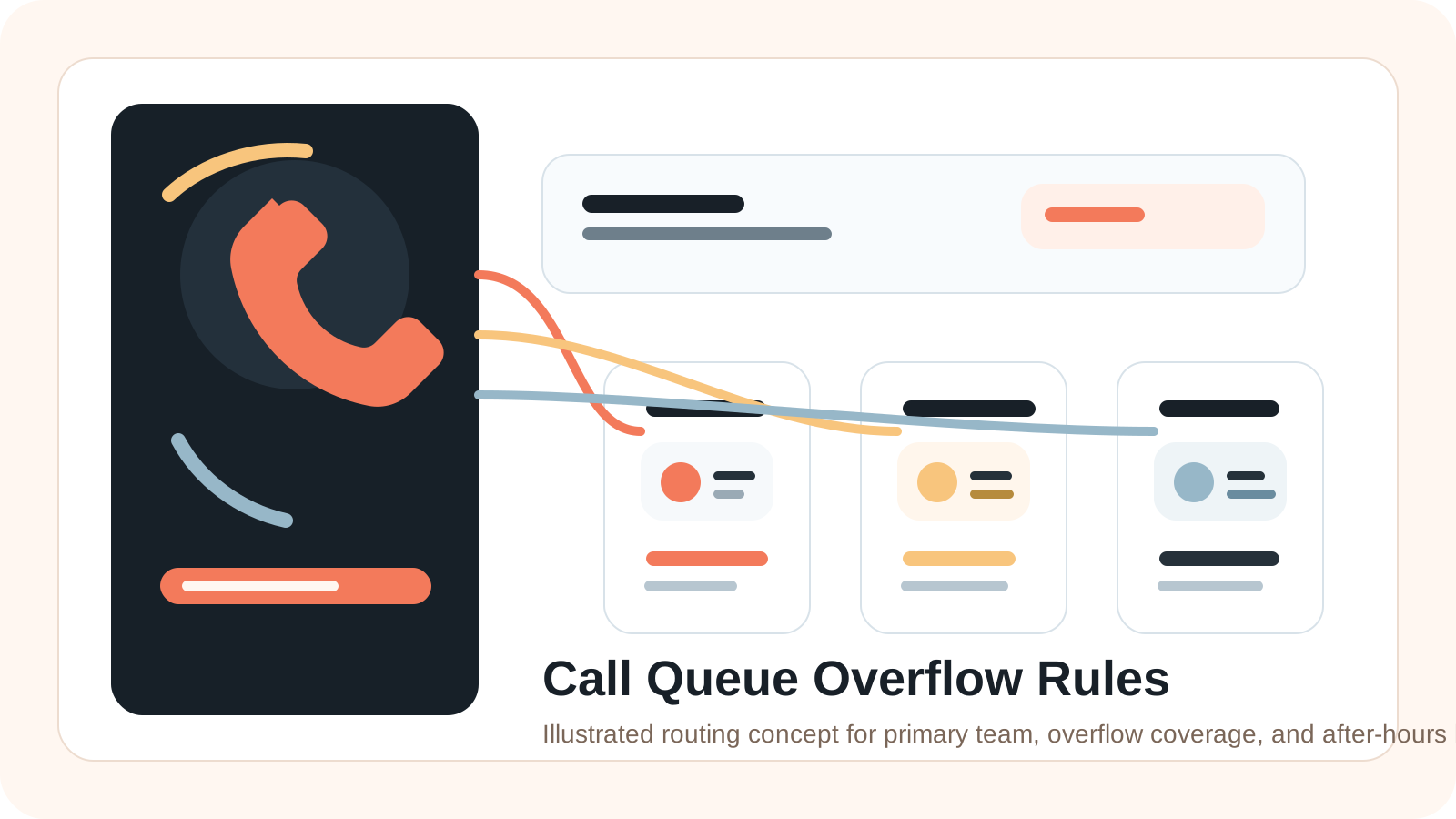
Overflow rules solve that by answering one simple question before the rush starts: what should happen when the first line of coverage is unavailable? The goal is not to build a giant enterprise call-center map. It is to create predictable routing for the few situations that repeatedly create missed opportunities.
Define the primary answer team first. Start with who owns normal inbound traffic during business hours. That may be one CSR queue, a dispatcher group, or a sales coordinator line depending on your structure. If normal ownership is unclear, overflow logic becomes messy because everyone thinks someone else is supposed to catch the call.
Write separate rules for busy-hour overflow and after-hours overflow. These are different problems. Busy-hour overflow is usually about preserving response speed while the office is active. After-hours overflow is about triage, message capture, emergency escalation, and next-day booking. One routing rule should not pretend to solve both scenarios equally well.
Decide which calls can move to a secondary team and which cannot. Some businesses can route overflow to another trained office user with no issue. Others need service-line or language-specific handling. Plumbing emergencies, membership cancellations, roofing storm calls, and high-value install leads may deserve a different path than routine schedule questions. The important thing is making those distinctions explicit before the phones get busy.
Keep context attached when a call moves. Customers hate repeating themselves, and office teams waste time when transfers lose the original reason for the call. If an overflow path sends the caller to another user, a secondary queue, or an after-hours handler, the business should still preserve caller identity, notes, and next-step expectations as cleanly as possible. That is where a CRM-linked phone system matters much more than isolated forwarding.
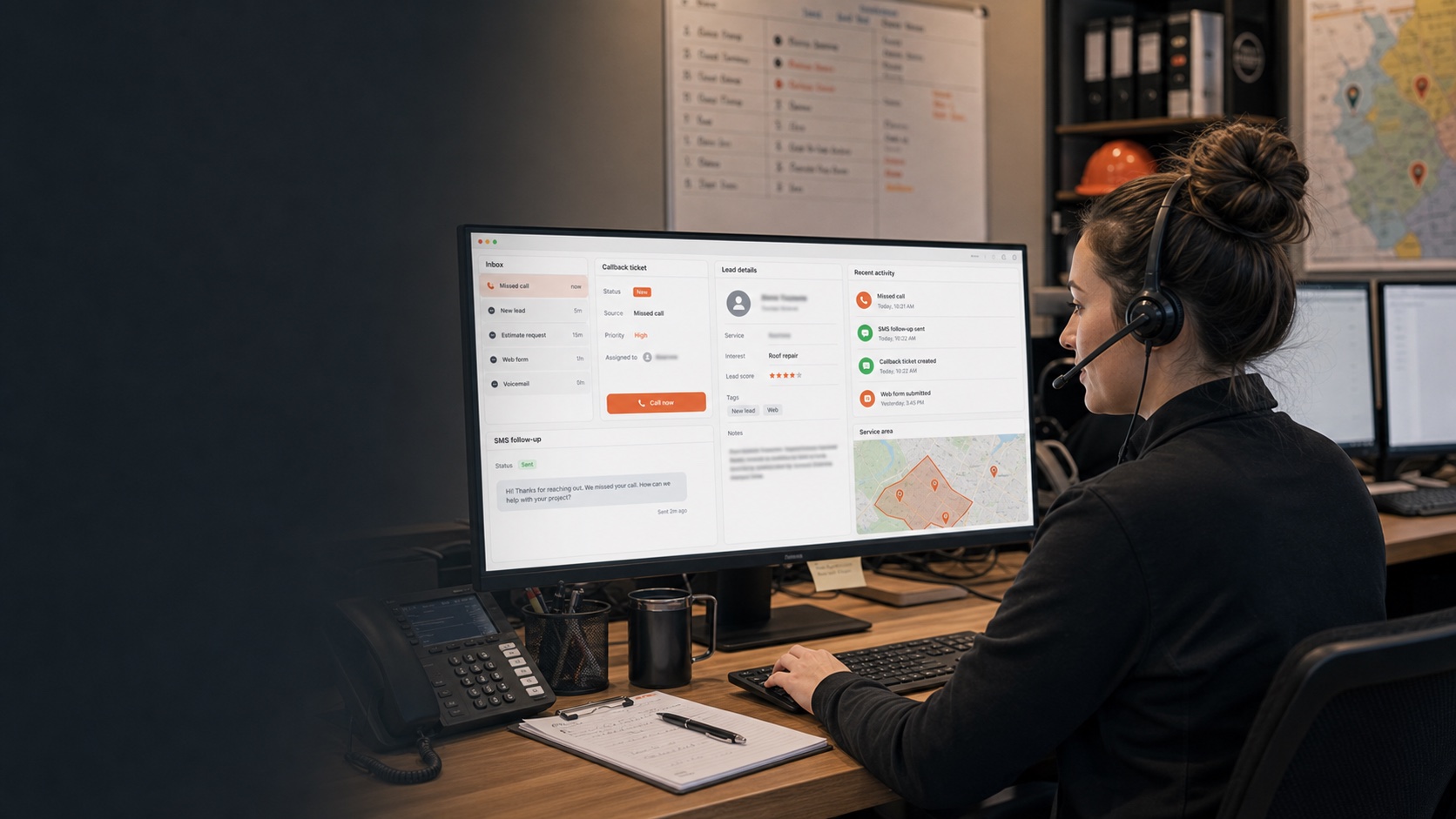
Create a fallback for missed calls, not just live routing. Even a strong queue will miss some calls. Overflow design should include the recovery path too: who gets the callback responsibility, how fast the business responds, whether a text-back is sent, and how missed-call outcomes are tracked. Otherwise the company builds a nice live routing tree and still loses leads in the recovery phase.
Use AI voice carefully where it fits. After-hours coverage, surge call capture, and basic qualification are good examples of where an AI voice agent can help. That does not mean every customer conversation should be automated or that urgent edge cases require no human escalation. The rule should be specific about when AI collects information, when it books, and when it hands off to a person.
Review overflow failures every month. Missed-call spikes, abandoned calls, slow callbacks, and confused transfers all reveal weak points in the routing design. Owners should review a sample of these failures the same way they would review dispatch misses or sales fallout. The point is to tighten the rules over time, not assume the first routing tree is permanently correct.
How Joby supports the workflow. Joby gives teams a CRM-linked phone system, call groups, call history, texts, and AI voice options so routing, follow-up, and customer context stay closer together. The software provides the building blocks, but the business still has to define who owns overflow and what each branch should do.
The bottom line. Phone overflow rules protect revenue because they remove guesswork during the busiest moments. Define the primary team, split busy-hour from after-hours logic, set clear secondary paths, preserve customer context, and design the missed-call recovery step too. When that system is written down, the business answers more calls without turning the office into chaos.