AI Voice Agents for Home Service Businesses: 7 Real Use Cases and Their Actual ROI
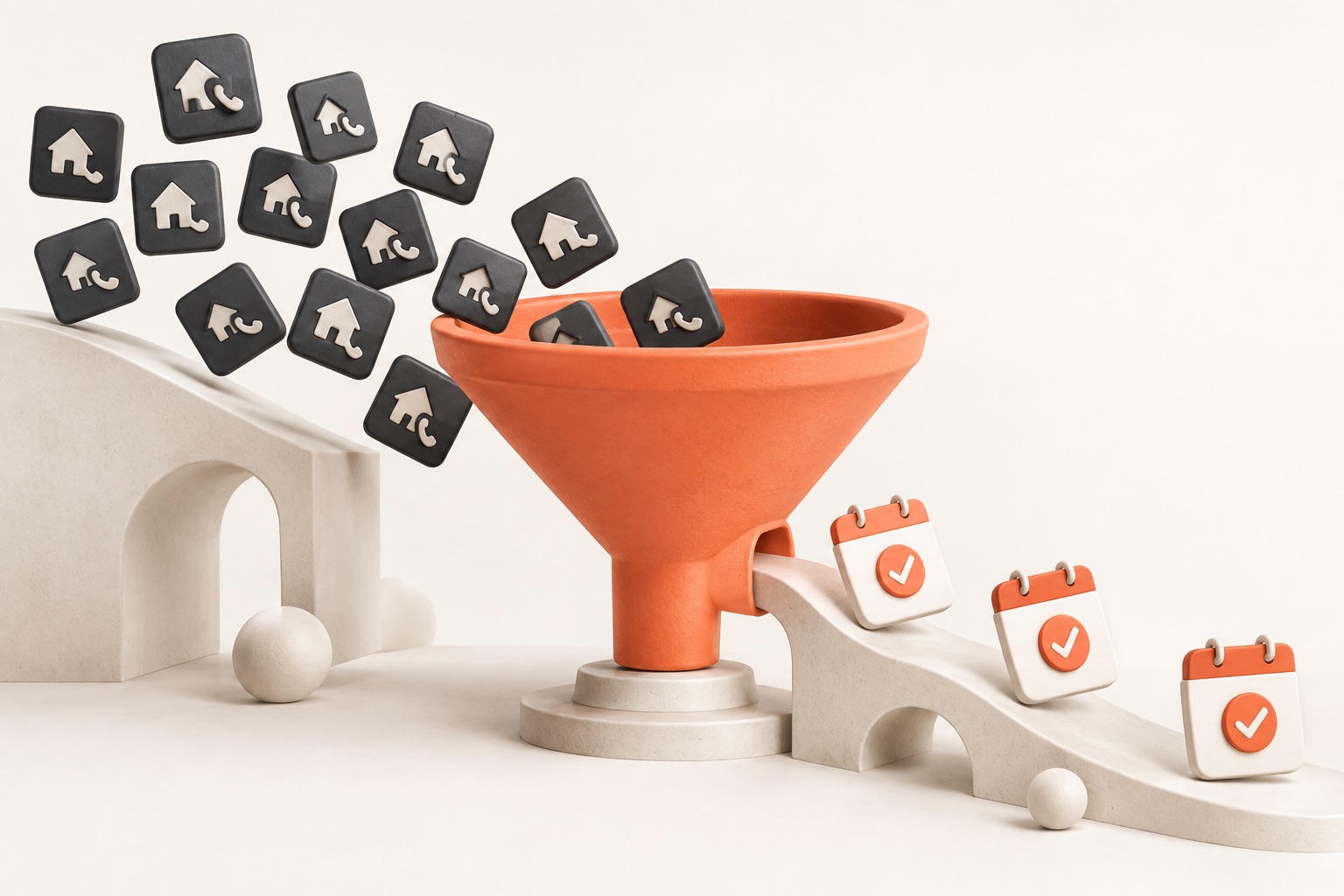
In the last 18 months, AI voice agents went from science fiction to production-ready technology. Home-service businesses are quietly deploying them to answer phones at 2 AM, qualify leads in real conversation, and book appointments directly into their CRMs — without a human in the loop. The marketing around this tech is dramatic. The reality is more nuanced. This article cuts through the hype with seven concrete use cases, actual numbers, and the specific scenarios where AI voice agents pay for themselves within weeks.
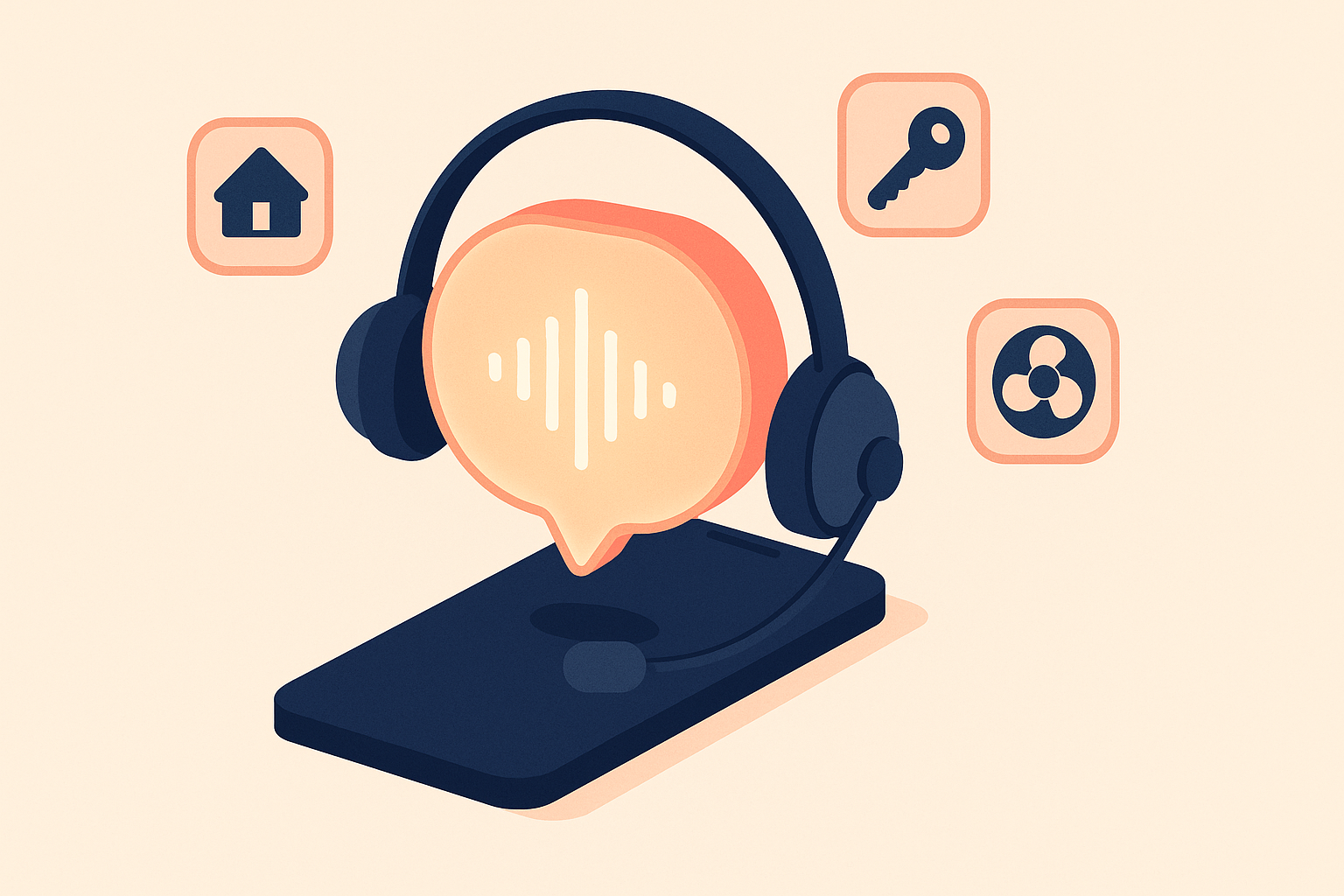
What an AI voice agent actually is. Modern AI voice agents are real-time voice AI systems built on three layers: speech-to-text (converts caller audio to text in 100-200 milliseconds), a large language model (processes the text and generates a response based on custom instructions you provide), and text-to-speech (turns the response back into natural-sounding voice). The current generation — powered by VAPI, OpenAI voice, and similar platforms — is good enough that most callers can't reliably tell they're talking to AI. Response latency is under 500 milliseconds, tone is natural, and the AI can handle interruptions, clarifications, and unexpected questions.
Use case 1 — Roofing after-hours storm calls. Scenario: a hailstorm hits your service area at 9 PM on a Saturday. Twenty homeowners with damaged roofs start calling your business in the next four hours. You and your office staff are offline until Monday. Without AI: those calls go to voicemail, most get never-returned, 15 of those 20 customers hire your competitor by Sunday afternoon. With AI: the AI answers every call, captures the homeowner's address, confirms damage type (hail, wind, leak), books an inspection for the earliest available Monday slot, and sends a confirmation SMS. Monday morning you walk in with 20 qualified inspections on your schedule. ROI math: a storm response cycle typically yields 3-8 full roof replacements at $10-30k each, so capturing even 2-3 additional jobs that would have gone elsewhere pays for an AI voice agent for a year.
Use case 2 — Locksmith 2 AM emergency calls. Scenario: locked-out customer calls at 2 AM. They're stressed, probably in a parking lot or outside their home, and they're going to call whoever answers first. Without AI: if you're asleep and don't pick up, they call the next locksmith in their Google search results within 60 seconds. With AI: the AI answers on the first ring, takes the location, confirms the type of lockout (car, house, commercial), identifies urgency, and either transfers to your on-call tech (if you have one) or books the next available slot and dispatches the first tech on duty. Even a 20% increase in captured after-hours calls translates to 10-20 extra jobs per month at $150-400 per job for a busy locksmith.
Use case 3 — HVAC seasonal overflow. Scenario: first heat wave of summer, 80 people call your HVAC business in a single morning. Your office staff can physically answer maybe 20 calls per hour with any quality. The rest get voicemail or busy signals. Without AI: you lose 60% of those first-heat-wave leads. With AI: the AI handles unlimited concurrent calls, qualifies each caller (diagnostic visit? install? quote request?), books them into the next available slot, and only escalates true emergencies (gas smell, no heat in winter, water leak) to a human. Revenue impact during a 4-day heat wave is typically 2-3x normal; capturing even an extra 30% of that peak volume is transformative.
Use case 4 — Plumbing triage for emergencies. Scenario: homeowner calls describing 'a little leak under the sink.' Without AI: your dispatcher books them for a standard visit in 3 days. With AI: the agent asks follow-up questions and discovers the leak is actually actively pooling on the floor and may have gotten into drywall. The AI categorizes this as urgent, dispatches same-day, and preserves the customer's home from $5,000 in water damage. The real value isn't just booking the appointment — it's asking the right follow-up questions consistently, which human dispatchers often skip when they're busy.
Use case 5 — Appointment confirmations and reminders (not what you think). Most people think AI voice is just about inbound answering. A huge underused use case is outbound appointment confirmations. Scenario: you have 30 appointments tomorrow; historically 20% no-show. Without AI: an admin calls each customer manually the day before, reaches half, leaves voicemails for the rest, still has 20% no-shows. With AI: the AI calls every customer at a scheduled time, confirms the appointment, reschedules if needed, and logs the outcome. Reached-rate goes from 50% to 90%, no-shows drop to 8-10%. For a shop with 150 appointments a week at $300 average revenue, dropping no-shows from 20% to 10% saves ~$4,500/week.
Use case 6 — Garage door recall campaigns. Scenario: you have a list of 2,000 customers who bought garage door springs or openers 4-7 years ago. Those parts are due for service. Without AI: you could hire a junior rep to call them; the rep works through 30 calls per hour, gets rejected on most, and costs $20-25/hour. Cost to work the list: $1,200-1,500 of labor, results: maybe 60 bookings. With AI: the AI dials the list in parallel, delivers a friendly 'we're your installer from 2020, want to schedule a tune-up?' script, books interested customers directly, and flags refusers to never call again. Cost: ~$150-300 of AI voice compute. Result: similar or better booking rate, 80% less time, zero HR overhead.
Use case 7 — Spanish-language and off-hours coverage. Scenario: 25% of your customer base speaks Spanish, and your office staff doesn't. Without AI: you lose every Spanish-speaking lead to the competitor across town who has a bilingual dispatcher. With AI: the AI detects Spanish and switches languages mid-call, handles the full conversation in Spanish, and books the appointment normally. Same logic applies to any second language — French in Quebec, Vietnamese in Houston, Tagalog in California. The AI is fluent in 20+ languages at the same quality as English, and you pay the same per-minute rate regardless.
What AI voice agents are NOT good at (yet). They're weak at highly ambiguous customer situations where human judgment matters (e.g., a regular customer calling in tears because their elderly parent just had a fall and they need someone out immediately — the AI handles this, but a human handles it better). They're also not great for negotiations (a customer arguing about a quote) or for high-trust sales scenarios where a human relationship is the value prop. The heuristic: anywhere the value is information capture and booking, AI wins. Anywhere the value is relationship or judgment, keep a human in the loop.
Implementation cost and timeline. A decent AI voice agent integrated into your CRM costs roughly $0.10-0.40 per minute of actual call time, plus a small monthly platform fee. For most home-service businesses this runs $100-500/month total — cheaper than hiring a part-time receptionist, dramatically cheaper than a 24/7 answering service. Setup takes 1-3 hours to train the agent on your business (pricing, service areas, FAQ, policies) and connect it to your calendar and CRM.
How this works in Joby. Joby includes an AI voice agent built on VAPI + OpenAI voice models as part of the Pro plan. You train it once on your business, point it at any Joby phone number, and it starts answering. Calls route into your normal CRM pipeline, appointments book directly into your calendar, and every conversation is transcribed and attached to the lead record for review and coaching. See the AI voice agent product page or AI receptionist solution page for specifics.
The bottom line. AI voice agents are no longer experimental technology. For home-service businesses they're already a straightforward ROI calculation: if you're losing more than a few thousand dollars of monthly revenue to missed calls, after-hours voicemail, or inefficient outbound campaigns, an AI voice agent will pay for itself inside 30 days. The businesses adopting them now will have a measurable advantage over competitors who wait until 2027 when it's table stakes.